





When it comes to kosher fish, the basic rule of kashrut is very precise: fish are permitted when they have both fins and scales. This seemingly simple principle makes it possible to distinguish between many species that are permitted and those that cannot be eaten according to Jewish dietary laws.
Kashrut is not only concerned with how food is prepared. It also determines which animals may be included in the diet. When it comes to fish, the presence of fins and scales is the main criterion used to identify species that are permitted.
But which fish are commonly considered kosher? Is salmon kosher? What about tuna, swordfish, sea bass? And why are shellfish, crustaceans and eel excluded? To answer these questions, it is useful to start with the basic principles of kashrut.
What does kosher fish mean?
The word kosher, or kasher, refers to anything that complies with the rules of Jewish tradition. Kashrut establishes specific requirements concerning which foods are permitted and how they must be produced, prepared and consumed.
For aquatic animals, the basic criterion is particularly clear: a fish is considered kosher if it has both fins and scales.
The scales must also be identifiable. This is especially important when buying fish that has already been cleaned or filleted, as the commercial name of a species is not always enough to determine whether it meets the requirements of kashrut.
In general, the presence of scales also indicates that the fish has fins, whereas the opposite is not necessarily true. For this reason, when verifying whether a fish meets kosher requirements, being able to see the skin can be particularly useful.
Which fish are kosher?
There are many species that meet the requirement of having both fins and scales. A number of fish commonly found in Mediterranean cuisine fall into this category.
Some of the best-known include salmon, trout, cod, hake, sea bream, sea bass, sole, sardines, anchovies, mackerel, grey mullet, red mullet, dentex, grouper, herring, carp, pike and perch.
Mullet, striped seabream, plaice and some varieties of turbot are also generally considered kosher. However, this last category deserves particular attention, as not every species commonly referred to as turbot necessarily has the characteristics required by kashrut.
Some of the most commonly known kosher fish include:
- salmon
- tuna
- mackerel
- sardines
- anchovies
- sea bream
- sea bass
- cod
- hake
- trout
- sole
- red mullet
- dentex
- grouper
- herring
- carp
However, the fact that a species appears on this list does not mean that every product made from that fish is automatically kosher. Kashrut also applies to food processing and preparation, so particular care is needed with industrial products, processed foods and products containing additional ingredients.
Is salmon kosher?
Yes, salmon is kosher because it has both fins and scales.
It is one of the best-known species and is also widely used in contemporary Jewish cuisine. The same principle applies to trout, which also has the characteristics required by kashrut.
However, when salmon is smoked, marinated, seasoned or otherwise processed, the situation can become more complicated. It is not enough for the fish itself to be kosher: the way it has been processed and the ingredients used must also be taken into account.
For this reason, when buying packaged products or specially prepared foods, kosher certification can be particularly important.
Is tuna kosher?
Tuna is also generally considered kosher, as it has both fins and scales.
Fresh tuna is therefore among the permitted species. Greater care is needed with canned or processed tuna. A can of tuna should not be assessed solely on the basis of the fish species: the production process, ingredients and any seasonings or additives must also be considered.
The same applies to many other fish-based products. A kosher fish does not automatically make every food prepared with that fish kosher.
Is swordfish kosher?
Swordfish is one of the species that can cause greater uncertainty when discussing kosher dietary laws.
The general principle remains the same: the fish must have fins and scales. However, the identification of certain species may vary according to different traditions and interpretations. For this reason, particularly when following kashrut strictly, it is better not to rely solely on the commercial name used by a fishmonger.
The same applies to other species whose identification may be less straightforward. When in doubt, it is preferable to consult a qualified rabbinic authority or purchase the fish through a supplier specialising in kosher food.
Which fish are not kosher?
The rule concerning fins and scales also makes it possible to identify which species are excluded. Shellfish, crustaceans and many other aquatic animals that lack both characteristics are not kosher.
Non-kosher foods therefore include, for example, shrimp, lobster, crab, mussels, clams, oysters and octopus.
Eel is also not kosher, as are catfish and monkfish, which do not have the characteristics required by kashrut.
In general, fish and other aquatic animals that do not have both fins and scales are not kosher.
This rule also explains why kosher cuisine can feature a wide variety of fish dishes while excluding seafood and crustaceans.
Kosher fish and fresh fish: what to check
If you are buying fresh fish and need to follow the rules of kashrut, checking the species is only the first step.
It is important to be able to identify the scales, particularly when fish is sold already filleted or without its skin. In these cases, it can be difficult to verify directly whether the fish has the required characteristics.
Preparation also requires attention. Knives, work surfaces and utensils used for fish must be handled according to the specific requirements of kashrut. For this reason, people who follow these rules strictly may prefer to buy fish from a fishmonger or specialist supplier who understands the requirements of kosher food preparation.
The issue becomes even more important with smoked, marinated, canned or processed fish, as the production process may involve additional ingredients and equipment.
Kosher fish and Roman Jewish cuisine
Fish has an important role in the gastronomic tradition of Roman Jewish cuisine, partly because of the long history of the Jewish Ghetto of Rome and the community’s relationship with the city’s fish market.
Over time, Roman Jewish cuisine has developed recipes that showcase fish through simple ingredients, traditional cooking methods and Mediterranean flavours. The result is a culinary tradition deeply connected to the history of Rome while also being part of the wider world of kosher cuisine.
In Rome, you can experience this tradition in the heart of the historic Ghetto, where kosher cuisine continues to represent a meeting point between culture, memory and gastronomy.
Where to eat kosher fish in Rome
If you want to taste kosher cuisine and discover how fish is interpreted within the Roman Jewish culinary tradition, one of the most representative areas is Via del Portico d’Ottavia.
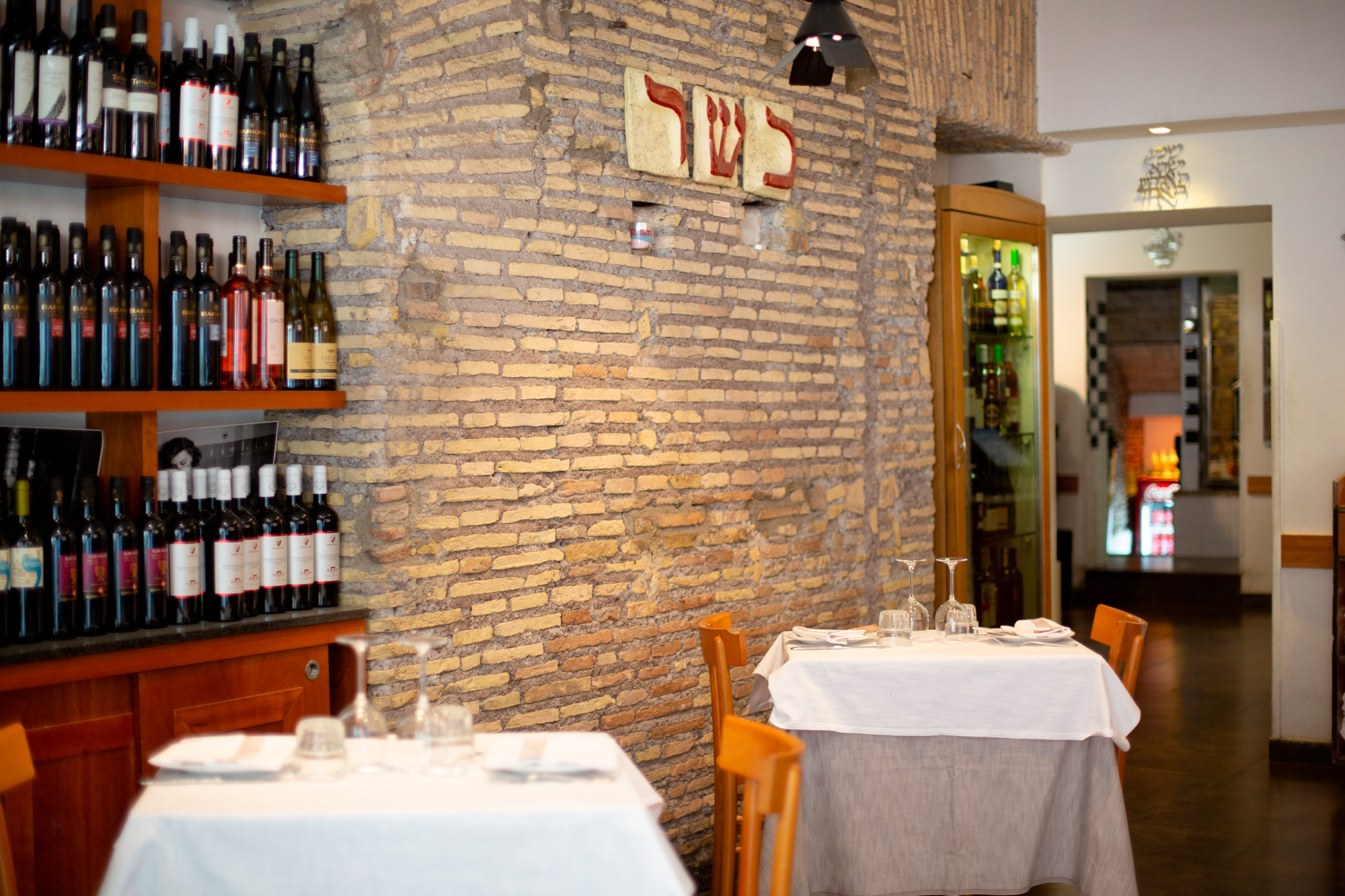
Ba’Ghetto is located in the heart of Rome’s Jewish Ghetto and offers a cuisine that combines Roman Jewish traditions, Middle Eastern influences and respect for the rules of kashrut. The menu also includes fish dishes, reflecting both the culinary heritage and the principles of kosher cuisine.
If you want to go beyond theory and experience authentic kosher cuisine in the heart of Rome’s Jewish Ghetto, book a table at Ba’Ghetto in Rome and discover the Roman Jewish culinary tradition through its flavours.
31.08.26
Share